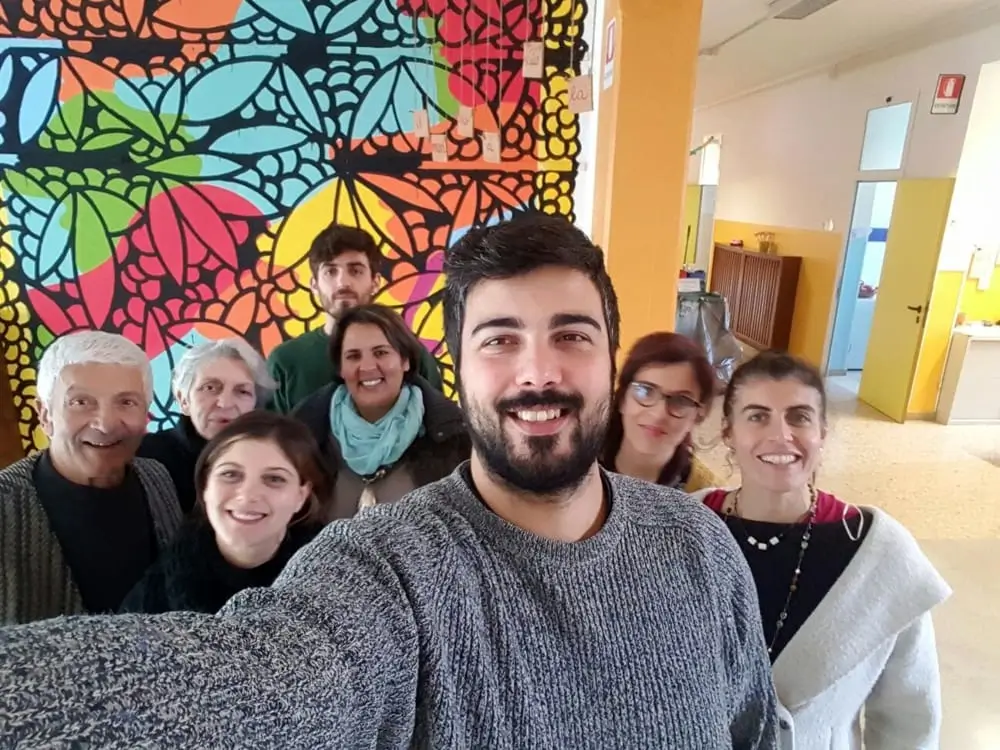
In December 2016, the creative campus of S.O.S. Scuola took place at the Italo Calvino Comprehensive Institute in Spresiano, Treviso. This initiative, promoted by the nonprofit organization Alveare per il Sociale and supported by Fondazione Poste Insieme Onlus, aimed to highlight the value of diversity and inclusion within educational spaces. The project ran from December 12 to 17 and transformed the school into a space for reflection, creativity, and active participation.
The school is home to 280 students, and 99 of them, more than one third, come from countries such as Romania, China, Ghana, Brazil, Bangladesh, Morocco, Serbia, Ukraine, Kosovo, and Albania. Alveare per il Sociale believes that diversity is a strength, but only when students and families are given the tools and opportunities to turn that diversity into a source of knowledge and growth. Without adequate support, cultural differences can become a barrier to inclusion rather than an asset.
To address this, S.O.S. Scuola involved teachers, students, and parents in a series of creative and community-centered activities. Thanks to the support of school principal Paola Bortolotto, the campus became a platform for discussion, connection, and expression. The week included a wide range of events such as games, shared meals, art workshops, and performances, all focused on building a more welcoming and inclusive school environment.
One of the highlights of the week was the creation of a large wall mural titled “Inno alla Vita” or “Ode to Life.” Guided by Neapolitan street artist Gianluca Raro, known for his murals in Scampia, students worked together to paint an artwork that celebrates the values of integration and openness. It became a symbol of the school’s collective identity and its commitment to acceptance and coexistence.
In practical terms, the project also delivered new learning tools. A multimedia classroom was set up specifically for non-Italian-speaking students. This space, equipped with five tablets and an interactive whiteboard with an integrated OPS system, was officially opened in the presence of the mayor Marco della Pietra and the local education officer Paolo Tagliapietra. This new classroom gives students improved access to digital resources and support for learning the Italian language.
The campus also introduced a theatre workshop that integrated digital tools, movement, visual storytelling, and performance to support language learning and social interaction. The goal was to create an educational environment where children feel free to express themselves while acquiring new skills in a fun and engaging way.
To recognize and honor the cultural backgrounds of the students, a multicultural lunch was organized on the final day. Families prepared dishes from their home countries and shared traditional music and dance with the school community. This event allowed everyone to celebrate their heritage while strengthening connections across different cultures.
Additional initiatives included a yoga class, a diversity workshop led by filmmaker and UNICEF ambassador Paolo Bianchini, and several creative sessions designed to encourage collaboration and empathy among students. These activities were not only enjoyable but also aimed at reinforcing a sense of shared responsibility and belonging within the school.
To ensure the continuity of these efforts, Fondazione Zanetti Onlus provided a cultural mediator to work with teachers and students in support of long-term integration. This role is especially important for helping to navigate language and cultural differences and for making sure all students have the chance to feel included and supported.
The Spresiano campus stands as a clear example of how schools can become hubs of dialogue, inclusion, and community energy. S.O.S. Scuola’s work shows that when children, educators, families, and artists come together, they can help transform education into a space where every student feels valued and every difference is seen as a source of growth.